Key Statistics
- A new longitudinal study has uncovered an extremely sobering fact: aggression in pornography has tripled in the last 25 years.(National Library of Medicine, 2025)
- 1 in10 (10%) teens reported personally knowing someone who had deepfake nude imagery created of them, and 1 in17 (6%) disclosed having been a direct victim of this form of abuse. (“Deepfake Nudes and Young People“, Thorn, 2025)
- Since its inception in 2015, the Revenge Porn Helpline has received over 338,000 reports of image based sexual abuse. The number of reports received by the Helpline increased 106% in 2023 alone. (2023 Revenge Porn Helpline Report, www.revengepornhelpline.org.uk)
- A 2022 study found that 52% of teens exposed to pornography reported seeing violent forms of pornography such as choking (36%), someone in pain (37%), or depictions of what appears to be rape (19%) (Common Sense Media, 2022)
- Among those that said they had seen pornography, children in the youngest age-group (11 to 13) were the most likely to say that their viewing of this content was mostly or all unintentional (62% vs. 46% of 16- to 17-year-olds).
50% of 11- to 13-year-olds, 65% of 14- to 15-year-olds and 78% of 16- to 17-year-olds reported having seen pornography in some way (shown/sent by someone else, searched for/stumbled upon it)
There was a disconnect between parents’ perceptions of their children’s pornography viewing practices and the reality: 75% of parents felt their child would not have seen pornography online, but of those children, 53% said they had in fact seen pornography
Of the children who admitted to intentionally searching for pornography (n=276), nearly two-thirds of them (63%) said they had done so at one point or another specifically for one or more of the four reasons: (1) Ideas for new things to try sexually (2) Learning about sex generally (3) Learning how to get better at sex (4) Learning what people expect from me sexually
Girls in particular mentioned using pornography to learn how to meet boys’ “expectations”
Overall, 41% of all children who were aware of pornography agreed that “watching porn makes people less respectful of the opposite sex”*.
Given that 63% of children aged 11 to 13 who had seen pornography said their first exposure had been unintentional, age-verification is likely to have a significant impact here.
83% of parents agreed with the statement “there should be robust age-verification controls in place to stop children (under-18s) seeing commercial pornography online”
Source: Report on People, Pornography & Age Verification (bbfc, January 2020) - A study analyzing videos from Pornhub and Xvideos found that 97 percent of the targets of violence and/or aggression were women. (Archives of Sexual Behavior, A Descriptive Analysis of the Types, Targets, and Relative Frequency of Aggression in Mainstream Pornography July 13, 2020)
- Online pornographic videos represent 27% of the online videos, 16% of the total flow of data and 5% of total Greenhouse gas emissions due to digital technology. (Reward Foundation, 2019)
- According to a survey by the research company Savanta ComRes last year, 38% of women under the age of 40 have experienced unwanted slapping, choking, gagging or spitting during consensual intercourse. Deepfake pornography accounts for a significant majority (96%) of deepfake videos online, even as other forms of non-pornographic deepfakes have gained popularity. (Deeptrace, 2019).
- Visits to Pornhub totaled 33.5 billion over the course of 2018, an increase of 5 billion visits over 2017. That equates to a daily average of 92 million visitors and at the time of this writing, Pornhub’s daily visits now exceed 100 million
30.3 billion searches, or 962 searches per second.
Every minute, 63,992 new visitors arrive at Pornhub,
12 new videos and 2 hours of content are uploaded to Pornhub every minute
Stormy Daniels came in first on our list of the searches that defined 2018.
Searches for the hit game ‘Fortnite’ also defined 2018 as it skyrocketed from obscurity to one of our Top 20 searches of the year. Each time a new Fortnite character was released, searches would increase dramatically.
Not only did searches for ‘outdoor’ porn grow throughout 2018, but our statisticians also noted that the number of uploads tagged as being filmed outdoors nearly tripled.
2018 saw Pornhub’s average visit duration grow by 14 seconds to 10 minutes and 13 seconds.
Pornhub’s top 4 searches worldwide by volume remained the same from 2017 to 2018. These included ‘lesbian’, ‘hentai’, ‘milf’ and ‘step mom’.
2018 saw the proportion of female visitors to Pornhub grow to 29%, an increase of 3 percentage points over 2017.
the average worldwide Pornhub user now being aged 35.5 years old. Together, millennials aged 18 to 34 remained as 61% of Pornhub’s traffic.
80% of Pornhub’s worldwide visits now coming from smartphones and tablets.
Among desktops, the Chrome browser still remains king at 57.3% of all visits, with an 8% gain in share during 2018. On mobile devices, the Chrome browser saw a slight gain to 41.1%, breaking its previous tie with Safari in 2017.
(Source: PornHub website, 2019)
- Research commissioned by the British Board of Film Classification (BBFC) shows that children and teenagers are watching and stumbling across pornography from an early age – in some cases as young as seven or eight. (BBFC, Sept. 26, 2019)
- The Porn Epidemic: Facts, Stats and Solutions (Josh D. McDowell, 2018)
- According to British authorities involved with implementing the new age verification law, there are at least 4.5 million porn sites, of which more than half are located in the US.
- More than four in 10 Americans (43%) now say pornography is morally acceptable, a seven-percentage-point increase from last year. (Gallup, June 2018)
- One in six of the over 15000 global respondents has watched pornography on a public network, among other things. (Neowin, July 2018)
- A Model: Age Verification. In 2017 the UK Parliament mandated age verification for access to pornography sites. If sites fail to comply, they may be fined, denied access to ancillary services or blocked. It is time for Congress to act. One researcher called children’s unlimited access to extreme and graphic internet pornography, “the largest unregulated social experiment in history.” Our society is paying a severe price for it.
- A 2017 global survey by Norton by Symantec found that one in six people admit to having used public Wi-Fi to watch adult content. Of those who admit to it they’ve done so in the following locations:- Hotel/Airbnb (40 percent)
– Café/Restaurant (30 percent)
– Work (29 percent)
– Airport (25 percent)
– On the street (24 percent)
– Train/bus station (18 percent)
– Public restroom/toilet (16 percent) - Pornography has changed. Extreme content is the new norm. Soft porn has disappeared. In 2010 the journal Violence Against Women reported physical aggression in 88.2% of leading pornography scenes and verbal aggression in 48.7% with 94.4% of the aggression directed towards women and girls. A February 2018 headline in Esquire Magazine read, “Incest is the Fastest Growing Trend in Porn.”
- The Minnesota Human Trafficking Task Force recently found 46 published research studies demonstrating that exposure to pornography puts individuals at increased risk for committing sexual offenses.
- Researchers at the University of Massachusetts at Boston performed a Google trend analysis showing searches for “teen porn” more than tripled between 2005-2013, and teen porn searches reached an estimated 500,000 daily in March 2013 or over one-third of total daily porn searches. You read that right, 500,000 searches daily for teen pornography. Americans are becoming more and more attracted to pornography depicting sex with underage persons and this growing exposure to increasingly deviant porn is driving more criminals toward victimizing more teenagers.
- Consumers might tell themselves that they aren’t personally affected by porn, that they won’t be fooled into believing its underlying messages, but studies suggest otherwise. There is clear evidence that porn makes many consumers more likely to support violence against women, to believe that women secretly enjoy being raped, and to actually be sexually aggressive in real life. (How Consuming Porn Can Lead to Violence. Fight the New Drug)
- Free access means porn use has skyrocketed. Today, many porn sites are free. New York Magazine reported that a decade ago total daily adult site traffic averaged less than 1 million unique visitors on the entire internet. Today, free Mindgeek tube sites alone receive 100 million unique visitors per day (The Economist – 2015).
- The use of filters by parents has not worked. In 2005 Pew Research found 54% usage of filters; in 2016 it was 39% with just 16% on mobile devices. Parents need help.
- A survey of 313 college students indicated that exposure to men’s magazines was significantly associated with lower intentions to seek sexual consent and lower intentions to adhere to decisions about sexual consent. Establishing and Adhering to Sexual Consent: The Association between Reading Magazines and College Students’ Sexual Consent Negotiation,” Journal of Sex Research 51, no. 3 (2014): 280–290.
- Harmful Effects of Pornography: 2016 Reference Guide. (Fightthenewdrug.org, 2016)
- PornHub, one of the industry’s biggest providers, claim their site streamed 75 GB of data a second last year—enough to fill 175 million 16 GB iPhones—a total of 87.8 billion views, up ten billion from 2014, another 15 billion over 2013. An estimated 87% of college-age men—and around 30% of women—doubleclick for sex either weekly or every day. (January 2016) “Falling In Love With Screens: The science behind how double-clicking for sex rewires our brains—and affects us all”.
- Individuals who never view sexually explicit material report higher relationship quality and lower rates of infidelity than those who do.
- Pornography is frequently cited as the ‘explanation’ for anal sex, and that ‘people must like it if they do it,’ contradicting the expectation that it will be painful for women. Men also are expected to persuade or coerce reluctant partners, which has become normalized as well as ‘accidental’ penetration. Marston, C. & Lewis, R. (2014) “Anal Heterosex Amoung Young People and Implications for Health Promotion: A Qualitative Study in the UK.” BMI Open.
- The more pornography a man watches, the more he needs to conjure images of pornography to maintain arousal, and will be more likely to ask for particular sexual acts with his partner and have concerns over his sexual performance and body image. Sun. A., Bridges, A., Johnson, J. & Ezzell, M. (2014) “Pornography and the Male Sexual Script: An Analysis of Consumption and Sexual Relations.” Archives of Sexual Behavior.
- Those who frequently consume Internet pornography are less likely to marry because they see pornography as a marital sexual gratification substitute. Malcolm, M. & Naufal, G. (2014) “Are Pornography and Marriage Substitutes for Young Men?” Institute for the Study of Labor.
- There is a positive correlation between hours of pornography consumed and higher narcissism levels. Additionally, those who have ever used pornography had higher levels of all three measures of narcissism than those who have never viewed Internet pornography. Kaspera, T., Shorta, M. & Milam, A. (2014) “Narcissism and Internet Pornography Use.” Journal of Sex & Marital Therapy. Vol. 41 (5)
- Extramarital sex is one of the most commonly cited reasons for divorce, and Pornography consumption is correlated with positive attitudes towards extramarital affairs. Wright, P., Tokunaga, R. & Bae, S. (2014) “More Than a Dalliance? Pornography Consumption and Extramarital Sex Attitudes Amoung Married U.S. Adults.” Psychology of Popular Media Culture.
- 17% of women describe themselves as addicted to pornography. Keith Perry, “Sex: Women ‘just as easily hooked on online porn as men.’” Daily Telegraph, 8/6/14, at http://www.telegraph.co.uk/news/science/11016874/Sex-Women-just-as-easily-hooked-on-online-porn-as-men.html
- Porn Sites Get More Visitors Each Month Than Netflix, Amazon And Twitter Combined. http://www.huffingtonpost.com/2013/05/03/internet–porn–stats_n_3187682.html (accessed June 6, 2014).
- A Google Trends analysis indicates that searches for “Teen Porn” have more than tripled between 2005–2013. Total searches for teen–related porn reached an estimated 500,000 daily in March 2013 — one–third of total daily searches for pornographic web sites. [23] Gail Dines, “A rare defeat for corporate lobbyists,” (August 1, 2013), http://www.counterpunch.org/ 2013/08/01/a–rare–defeat–for–corporate–lobbyists/ (accessed June 6, 2014). Dr. Dines also analyzed the content of the three most popular “porntubes,” the portals that serve as gateways to online porn, and found that they contained 18 million teen–related pages–again, the largest single genre and about one–third of the total content.
- 30% of the Internet industry is pornography.[19] Stephen Yagielowicz, “The Internet Really is Porn,” http://www.xbiz.com/news/146703 (accessed 6/11/14). “Anthony compiled data from Google’s DoubleClick Ad Planner to reveal that XVideos is currently the largest adult website, boasting 4.4 billion page views per month; with other adult sites, such as LiveJasmin, YouPorn, Tube8 and Pornhub all commanding vast expanses of market share, ‘that dwarf almost everything except the Googles and Facebooks of the Internet.’” “. . . that sets adult sites apart from non–adult sites; with Anthony comparing a 15–20 minute average porn site visit to a three–to–six minute visit on a news site as evidence of adult’s stickiness. . . . Anthony states that‘s while the amounts vary, typical adult websites contain 50 to 200 terabytes of porn and are responsible for nearly a third of all Internet traffic.’” “Anthony stated, ‘It’s probably not unrealistic to say that porn makes up 30 percent of the total data transferred across the Internet.’” See Sebastin Anthony, “Just how big are porn sites?” Extreme Tech (Apr.4 2012), http://www.extremetech.com/computing/123929–just–how–big–are–porn–sites.
- The online porn industry makes over $3,000 per second. [20] Ibid.
- Mobile porn is expected to reach $2.8 billion by 2015. [21] Juniper Research, “Videochat and subscription services to drive mobile adult revenues to $2.8bn by 2015, Juniper Report finds,” Oct. 14, 2010. http://www.juniperresearch.com/viewpressrelease.php?pr=210 (accessed December 27, 2012).
- The United States is the largest producer and exporter of hardcore pornographic DVDs and web material. [22] http://familysafemedia.com/pornography_statistics.html#important_countries(accessed June 6, 2014). Pornographic web pages by country are U. S. 244,661,900(89%) and Germany 10,030,200 (4%).
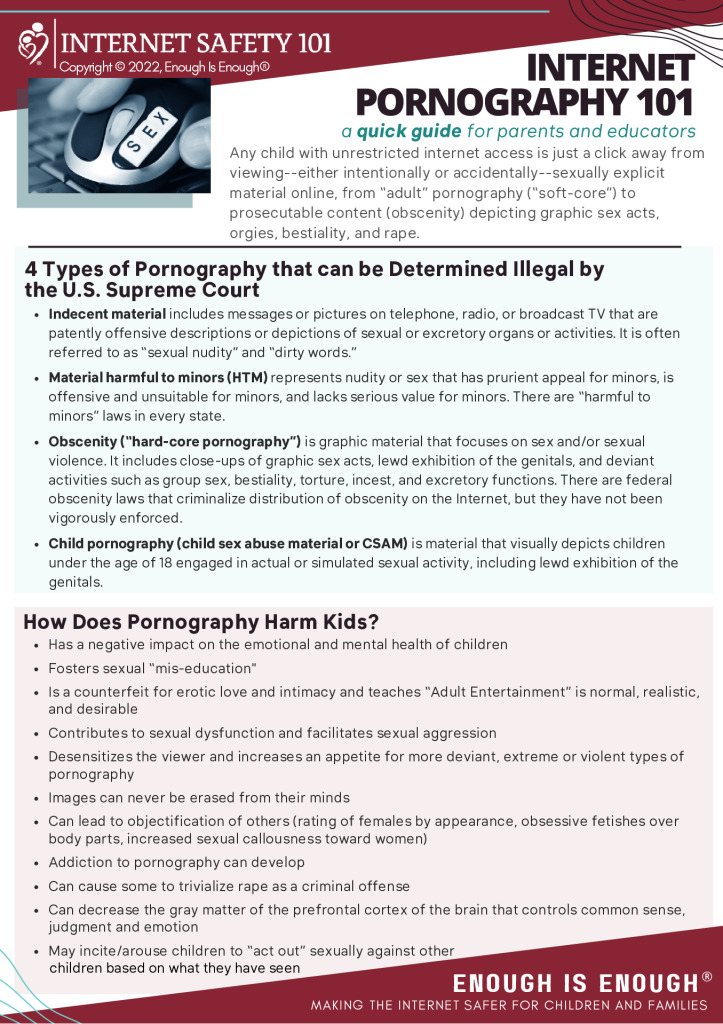
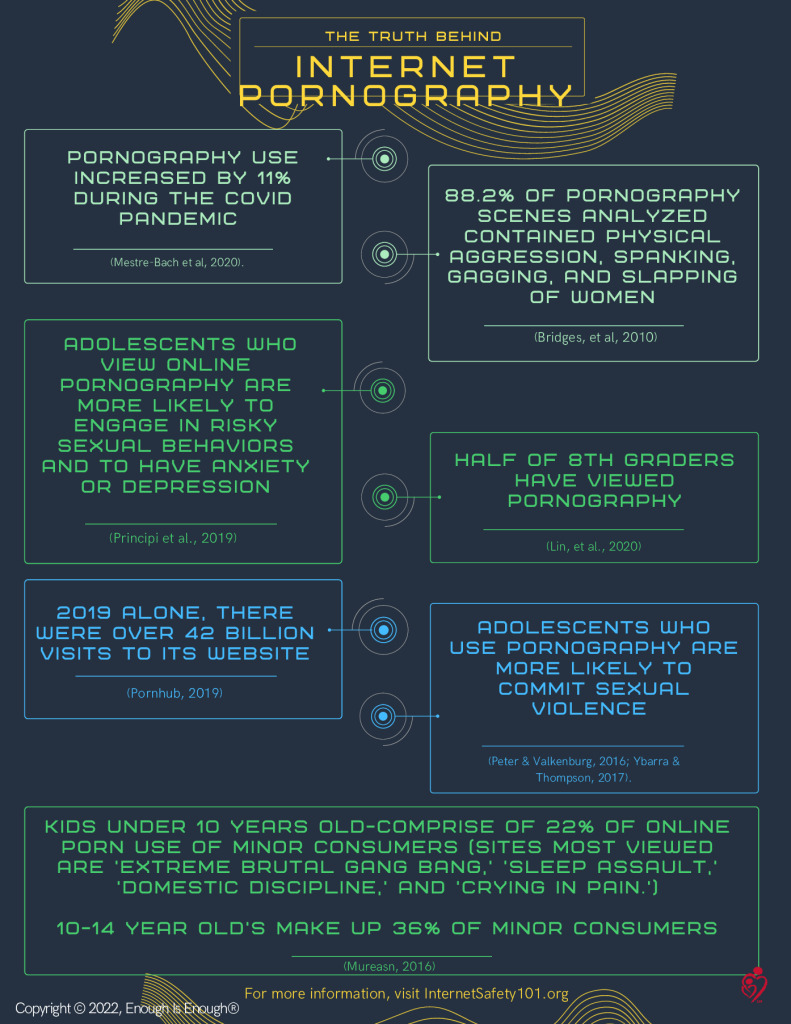
- Of the 304 scenes analyzed, 88.2% contained physical aggression, principally spanking, gagging, and slapping, while 48.7% of scenes contained verbal aggression, primarily name–calling. Perpetrators of aggression were usually male, whereas targets of aggression were overwhelmingly female. [24] Ana Bridges, et al., “Violence Against Women,” Sage 16, no. 10 (October 2010): 1065–1085. This current study analyzes the content of popular pornographic videos with the objectives of updating depictions of aggression, degradation, and sexual practices and comparing the study’s results to previous content analysis studies. Findings indicate high levels of aggression in pornography in both verbal and physical forms.
- A Google search for ‘bestiality’ generated 2.7 million returns. (Google-accessed April 28, 2014).
- 30% of the Internet industry is pornography. [18] Stephen Yagielowicz, “The Internet Really is Porn,” http://www.xbiz.com/news/146703 (accessed 6/11/14). “Anthony compiled data from Google’s Double Click Ad Planner to reveal that Videos is currently the largest adult website, boasting 4.4 billion page views per month; with other adult sites, such as LiveJasmin, YouPorn, Tube8 and Pornhub all commanding vast expanses of market share, ‘that dwarf almost everything except the Googles and Facebooks of the Internet.’” “…that sets adult sites apart from non-adult sites; with Anthony comparing a 15-20 minute average porn site visit to a three-to-six minute visit on a news site as evidence of adult’s stickiness. . . . Anthony states that ‘while the amounts vary, typical adult websites contain 50 to 200 terabytes of porn and are responsible for nearly a third of all Internet traffic.’” “Anthony stated, ‘It’s probably not unrealistic to say that porn makes up 30 percent of the total data transferred across the Internet.’” See Sebastin Anthony, “Just how big are porn sites?” Extreme Tech, http://www.extremetech.com/computing/123929-just-how-big-are-porn-sites.
- The United States is the largest producer and exporter of hard core pornographic DVDs and web material, followed by Germany. Ibid.
- A Google Trends analysis indicates that searches for “Teen Porn” have more than tripled between 2005-2013. Total searches for teen-related porn reached an estimated 500,000 daily in March 201— one-third of total daily searches for pornographic web sites.
- A Google search for ‘bestiality’ generated 2.7 million returns. (http://familysafemedia.com/pornography_statistics.html#important_countries)
- 43 percent of those surveyed started to view porn between the ages of 11 and 13, 47 percent spend between 30 minutes and three hours a day watching porn. (Study exposes secret world of porn addiction, University Of Sydney, May 2012)
- A longitudinal study following 10–15-year-olds over a period of three years found that exposure to violent pornography predicted a nearly six-fold increase in self-reported sexually aggressive behavior later on. To be very clear: violent content is not a small subset of the pornography kids are seeing. (NIH, 2011)
- A recent content analysis of the 50 best-selling adult videos revealed that across all scenes:
- 3,376 verbal and/or physically aggressive acts were observed.
- On average, scenes had 11.52 acts of either verbal of physical aggression, ranging from none to 128.
- 48 percent of the 304 scenes analyzed contained verbal aggression, while more than 88 percent showed physical aggression.
- 72 percent of aggressive acts were perpetrated by men.
- 88.2% of top-rated porn scenes contain physical aggression (spanking, gagging, slapping, etc.); 48.7% contain verbal aggression (name calling). Perpetrators were usually male,
- 94 percent of aggressive acts were committed against women. (Bridges, A., Wosnitzer)
- R., Scharrer, E., Sun, C., & Liberman, R. (in press). Aggression and sexual behavior in best-selling pornography: A content analysis update. Violence Against Women.)
- Findings from the Youth Internet Safety Survey indicate that 15% of 12-17 year olds have purposefully looked at x-rated material online.
- Data from the PEW Internet and American Life Project suggest that 70% of 15-17 year old Internet users accidently view pornography “very” or “Somewhat” often.
- Men who view pornography are more likely to show an increased behavioral intent to rape, and are more likely to believe rape myths. Foubert, JD; Brosi MW; Bannon, RS. “Pornography Viewing amoung Fraternity Men: Effects on Bystander Intervention, Rape Myth Acceptance and Behavioral Intent to Commit Sexual Assult,” Sexual Addiction & Compulsivity, 2011; 18(4): 212-231, at http://www.tandfonline.com/doi/abs/10.1080/10720162.2011.625552#.VLGJH2sfrtQ
- The words “sex” and “porn” rank fourth and sixth among the top ten most popular search terms. [15] Symantec. (10 August 2009). School’s Out and Your Kids are Online: Do you know what they’ve been searching for this summer? Cupperton, CA.
In a 2025 report by Thorn:
- Among teens, 1 in 10 (10%) reported personally knowing someone who had deepfake nude
imagery created of them, and 1 in 17 (6%) disclosed having been a direct victim of this form of abuse. - 84% of young people believe deepfake nudes cause harm to the person depicted.
- Among those who admitted to creating deepfake nudes, they described easy access to deepfake technologies
(Deepfake Nudes & Young People, Thorn, March 2025)
In 2024 alone, the National Center for Missing & Exploited Children (NCMEC) received reports of more than 62 million images of suspected CSAM, and received more than 546,000 reports concerning online enticement – a 192% increase compared to reports in 2023. (National Center for Missing and Exploited Children Cyber Tipline, 2024)
In a 2023 report by Thorn:
- 7% of minors reported they’d reshared someone else’s sexual images, yet nearly 20% reported they had seen nonconsensually reshared intimate images of others. Roughly 1 in 10 minors reported they knew of cases where their friends used AI tools to generate nudes of other kids.
- More than half (59%) of minors reported they’ve had a potentially harmful online experience, and more than 1 in 3 minors reported they’ve had an online sexual interaction.
- One in five preteens (9-12-year-olds) reported having an online sexual interaction with someone they believed to be an adult.
- 1 in 4 minors agree it’s normal for people their age to share nudes with each other, and 1 in 7 minors admit to having shared their own explicit imagery (SG-CSAM).
- Among minors who have shared their own SG-CSAM, 1 in 3 reported having done so with an adult.
- 1 in 6 minors who experienced an online sexual interaction did not disclose their experience to anyone.
(Thorn, Deepfake Nudes and Other Trends in Youth Behavior Online in 2023; published August 2024).
- In 2023, NCMEC’s CyberTipline received 36.2 million reports of suspected child sexual exploitation online. Those reports contained more than 105 million images, videos and other files. They also saw an explosion in reports of online enticement, an increase of more than 300% between 2021 – 2023. (NCMEC Jan, 2024)
- Someone known and trusted by the child or child’s family members, perpetrates 91% of child sexual abuse. (Centers for Disease Control and Prevention, Accessed April 2023),
- U.S. law enforcement resources are inadequate to address the problem: Over the past three months, law enforcement was not able to investigate nearly 100,000 IP addresses that are known to be downloading and sharing CSAM due to limited resources (Senate Judiciary Hearing, Feb. 14, 2023)
- The volume of online child sexual exploitation continues to rise exponentially, and last year (2022) NCMEC’s CyberTipline received over 32 million reports containing more than 88 million images/videos and other content concerning child sexual exploitation. (National Center for Missing and Exploited Children, Feb. 2, 2023)
- Younger and younger children being targeted “on an industrial scale” by internet groomers. In 2021, there was a three-fold increase in imagery showing 7–10-year-olds who have been targeted and groomed by internet predators. (Internet Watch Foundation, January 2022)
- The number of child sexual abuse material (CSAM) producers sentenced between 2005 and 2019 increased by 422% during that time period. (Federal Sentencing of Child Pornography Production Offenses, 2021)
- A 2022 survey of dark web users conducted by Finnish nonprofit Suojellaan Lapsia Ry found that 37% of global respondents reported seeking direct contact with a child after viewing CSAM. (Suojellann Lapsia Ry, July 11, 2021)
- In 2021, NCMEC received more than 29.3 million (up 35% over 2020) CyberTipline reports containing over 84.9 million images, videos, and other content related to suspected child sexual exploitation (up 29.8% over 2020). Over the past fifteen years, the number of reports of suspected child sexual abuse materials (CSAM) made to the CyberTipline has increased by 15,000% (CyberTipline 2021 Report, National Center for Missing and Exploited Children).
- The US hosts more child sexual abuse content online than any other country in the world, new research has found. The US accounted for 30% of the global total of child sexual abuse material (CSAM) URLs at the end of March 2022, according to the Internet Watch Foundation, a UK-based organization that works to spot and take down abusive content. (The US now hosts more child sexual abuse material online than any other country , 2021 Annual Report, Internet Watch Foundation).The US hosted 21% of global CSAM URLs at the end of 2021, according to data from the foundation’s annual report.
- 98% of child sexual abuse material reports involved children under 13 years old, 30% of which involved children under 10 years old, including infants and toddlers. (Internet Watch Foundation Annual Report, 2021)
- Transparency reports of seven of the biggest social networks were reviewed to find out how prevalent child abuse is on their platforms. Transparency reports typically include content removals, which are broken down into various categories. This report those related to child nudity, abuse, and sexual exploitation.Key findings:
- TikTok saw removals nearly double between 2019 and 2020
- YouTube has seen a 169% surge in removals between 2018 and 2020
- Facebook saw a modest 3% decrease between 2019 and 2020
Source: Comparitech, February 24, 2021)
- 2020 was a record-breaking year, with more than 21.7 million reports of suspected child sexual exploitation made to NCMEC’s CyberTipline. This marks the highest number of reports ever received in one year – a 28% increase over 2019 – and a disturbing 97.5% increase in online enticement reports alone. (NCMEC, Rise in Online Enticement and Other Trends: NCMEC Releases 2020 Exploitation Stats, Feb. 24, 2021)
- In 2020, IWF analysts processed 299,600 reports, which include tip offs from members of the public. This is up from 260,400 reports in 2019. This is an increase of 15%. Of these reports, 153,350 were confirmed as containing images and/or videos of children being sexually abused. This compares to 132,700 in 2019 – an increase of 16%. Every report contains between one, and thousands of child sexual abuse images and videos. This equates to millions of images and videos. Of these, 68,000 reports were tagged as including “self-generated” child sexual abuse content – a 77% increase on 2019’s total of 38,400 reports. (Internet Watch Foundation, Jan. 12, 2021)
- The United States remains #2 in hosting child sex abuse URLs:Netherlands 77%
US – 5%
France 4%
Russia 2%
Lativia 2 %
Luxembourg 2%
(Internet Watch Foundation Annual Report, 2020) - A meta-analysis of 37 studies found that exposure to violent or rape pornography increased a child’s odds of experiencing sexual exploitation 3-5 times. (JAMA Network, Demographic and Psychosocial Factors Associated With Child Sexual Exploitation: A Systematic Review and Meta-analysis, September 22, 2020)
- Homeland Security Investigations agents made 3,771 criminal arrests relating to child exploitation in the 2019 fiscal year, marking an 18% increase from the previous fiscal year. The numbers reflected a significant uptick — 18% — from the previous fiscal year. (Daily caller, Nov. 14, 2019)
- Tech companies reported over 45 million online photos and videos of children being sexually abused — more than double what they found the previous year.
- In 1998, there were over 3,000 reports of child sexual abuse imagery.
- Just over a decade later, yearly reports soared past 100,000.
- In 2014, that number surpassed 1 million for the first time.
- Last year, there were 18.4 million, more than one-third of the total ever reported.
- Despite landmark legislation past in 2008 to reign in the scourge (which has gone largely underfunded)the explosion in detected content kept growing — exponentially. (New York Times, Sept. 30, 2019)
- The National Center for Missing and Exploited Children (NCMEC) operates the CyberTipline, a national mechanism for the public and electronic service providers to report instances of suspected child sexual exploitation. In 2018 the CyberTipline received more than 18.4 million reports, most of which related to:
(1) Apparent child sexual abuse images. (2) Online enticement, including “sextortion.” (3) Child sex trafficking. (4) Child sexual molestation.
Since its inception, the CyberTipline has received more than 45 million reports.
To further NCMEC’s mission and help reduce proliferation, NCMEC has sent more than 271,000 notifications to electronic service providers regarding publicly accessible websites (URLs) on which suspected child sexual abuse images appeared.
NCMEC’s Child Victim Identification Program, which helps to locate and rescue child victims in abusive images, has reviewed more than 273 million images and videos and law enforcement has identified more than16,700 child victims. (Source: National Center for Missing & Exploited Children, Exploited Children Statistics. Accessed May 3, 2019) - Study Key Findings:
- Girls appear in the overwhelming majority of CSAM.
- Prepubescent children are at the greatest risk to be depicted in CSAM.
- When boys are victimized, they are much more likely than girls to be subjected to very explicit or egregious abuse.
- On average boys depicted in CSAM are younger than girls and more likely to have not yet reached puberty.
(Source: Seto, M. C., Buckman, C., Dwyer, R. G., & Quayle, E. (2018, March 28). Production and Active Trading of Child Sexual Exploitation Images Depicting Identified Victim)
- Children 10 years old and younger account for 22 percent of all online obscene-content consumption in the 18-years-old-and-under category.
- 60% of all reported child sexual abuse material features children under the age of 12. (Interpol, 2018)
- The annual number of persons prosecuted for commercial sexual exploitation of children (CSEC) cases filed in U.S. district court nearly doubled between 2004 and 2013, increasing from 1,405 to 2,776 cases.Suspects referred for the possession of child pornography (72 percent) accounted for the majority of all CSEC suspects, followed by those suspected of child sex trafficking (18 percent) and child pornography production (10 percent). Most suspects arrested for CSEC crimes were male (97 percent), were U.S. citizens (97 percent), were white (82 percent), had no prior felony convictions (79 percent) and were not married (70 percent). CSEC suspects had a median age of 39 years, and more than half (56 percent) had no more than a high school education. (Department of Justice, Oct. 2017)
- In a survey led by the Canadian Centre for Child Protection, 67% of CSAM survivors said the distribution of their images impacts them differently than the hands-on abuse they suffered because the distribution never ends and the images are permanent. (Survivor’s Survey, Executive Summary 2017)
- 67% of Child Sexual Abuse Imagery (CSAI) survivors said the distribution of their images impacts them differently than the hands-on abuse they suffered because the distribution never ends and the images are permanent. (Canadian Centre for Child Protection, 2017)
- Child pornography offences have exploded by more than 200 per cent in the last decade, a trend that advocates say is fueled by the easy spread of illicit material over the internet. Incidents of child pornography climbed for the eighth year in a row in 2016. The agency recorded 6,245 incidents last year, up from 4,380 in 2015. That represents a more than 40 per cent rate increase in just one year, and a 233 percent spike from the rate reported in 2006 (Statistics Canada, July 2017)
- A 2016 study by the Center for Court Innovation found that between 8,900 and 10,500 children, ages 13 to 17, are commercially exploited each year in the United States. (Center for Court Innovation, 2016)
- 92% of all child sexual abuse URLs we identified globally in 2016 were hosted in these five countries: Netherlands, UNITED STATES, Canada, France & Russia. (U.S. was ranked 2nd). https://annualreport.iwf.org.uk/assets/pdf/iwf_report_2016.pdf
- The Canadian Centre for Child Protection found that children under 12 years old were depicted in 78.30% of the images and videos assessed by their team, and 63.40% of those children were under 8 years of age. Among that same material, they found that 80.42% of the children were girls, while 19.58% were boys. (2016 study).
- 42% of sextortion victims met their abuser online Thorn. (2015) Child Pornography Statistics. Thorn. [Online] [Accessed 29th December 2015] https://www.wearethorn.org/child-pornography-and-abuse-statistics/
- Internet Safety is now the 4th top ranked issue in the list of health concerns for U.S. children. C.S. Mott Children’s Hospital (2015) Sexting and internet safety climb top 10 list of health concerns for children across the U.S. National Poll on Children’s Health, University of Michigan [Online] [Accessed 29th December 2015] http://www.mottchildren.org/news/archive/201508/sexting
- This year, one in 10 children under the age of 18 will be sexually abused in the United States.
Source: http://www.d2l.org/wp-content/uploads/2017/02/PREVALENCE-RATE-WHITE-PAPER-D2L.pdf (2013) - The United States is a top producer and consumer of child abuse content. (Thorn, 2014).
- The “4 every girl campaign” found that underage female characters on primetime television are more likely to be presented in sexual scenes than adult women (Parent’s Television Council, 2013)
- Pornography and stripping were two forms of exploitation most likely to be written into scripts as punchy lines (Parent’s Television Council, 2013)
- There are over 747,408 registered sex offenders in the United States, and over 100,000 are lost in the system(National Center for Missing & Exploited Children, 2012)
Child Pornography
- The National Center for Missing and Exploited Children took in 4.1-million reports of child cyber abuse in April 2020, a fourfold increase over April 2019. (LA Times, May 21, 2020)
- More than 30% of the searches conducted in eDonkey P2P network are related to child sexual abuse. Thorn. (2015) Child Pornography Statistics. Thorn. [Online] [Accessed 29th December 2015] https://www.wearethorn.org/child-pornography-and-abuse-statistics/
- As of December 2012, NCMEC’s child victim identification program has reviewed and analyzed more than 80 million child pornography images since it was created in 2002. (National Center for Missing and Exploited Children, 2012)
- There has been a 774% increase in the number of child pornography images and videos reviewed through the National Center for Missing and Exploited Children’s Child Victim Identification Program (1.98 million images/videos) to 2011 (17.3 million images/videos). (NCMEC data illustrate the explosion. Child Victim Identification Program (CVIP), 2005- reviewed 1.98 million child pornography images and videos. 2008 – 8.6 million, a four-fold increase in three years. 2010 – 13.6 million, 2011 – 17.3 million.)
- 73% of teen respondents age 13 to 17 have watched pornography online—and more than half (54%) reported first seeing pornography by the time they reached the age of 13 (Common Sense Media, “Teens and Pornography, 2023)
- Studies have highlighted the lack of formal sex education during childhood and adolescence, instead showing a preference to obtain information through pornography or the internet rather than going to health professionals or their parents. This can lead to dangers for their affective-sexual health, not only because of the risky practices that are displayed but also because they favor sexual practices based on male domination and female submission. (National Library of Medicine, June 2023).
- A report from Common Sense Media revealed:
- 75% of teenagers have viewed pornography by age 17
- Average age of first exposure to pornography is age 12
- 41% of teenagers saying they had seen images of nudity or sexual acts online during the school day (bypassing existing WiFi filtering)
- 58% say they came across the pornography by accident while surfing the web or on social media
- Survey of 1358 Americans age 13 to 17 found that more than half said they viewed violent porn (rape, choking, someone in pain)
- 45% from above survey said porn provided helpful information about sex and helped them discover their sexuality
- 5% of teen respondents said they first saw online pornography at age 10 or younger.
- While the vast majority of respondents said they have seen pornography, nearly half (44%) indicated that they had done so intentionally, while slightly more than half (58%) indicated they had encountered pornography accidentally. Unintentional exposure to pornography could be a common experience for teens, as 63% of those who said they have only seen pornography accidentally reported that they had been exposed to pornography in the past week. (2022 Teens and Pornography, Common Sense Media)
- A nationally representative estimate of U.S. youths (ages 14 to 18) exposed to pornography: 84.4% of males and 57% of females. (Preliminary Insights from a U.S. Probability Sample on Adolescents’ Pornography Exposure, Media Psychology, and Sexual Aggression. Journal of Health Communication, 2021).
- A meta-analysis of 37 studies found that exposure to violent or rape pornography increased a child’s odds of experiencing sexual exploitation by nearly three times. (JAMA Network Open 3, no. 9 (2020)
- Research on the Impact of Porn and Children (BBFC, 2019)
- 41% of young people (aged between 11 and 17) who knew about pornography agreed that watching pornography made people less respectful of the opposite sex. Only 13% disagreed.
- 75% of parents in the survey thought their child hadn’t seen pornography online, but in reality 53% of their children reported that they had in fact seen it.
- 60% of parents claimed to have discussed pornography with their child. However, very few children interviewed in the qualitative work said they had had such a conversation.
- Parents were more likely to think their sons had seen pornography than their daughters. 17% of parents answering about their daughter thought their child would have seen pornography, compared to 32% answering about their son. In reality, 58% of girls in the survey actually reported having seen pornography at some point compared to 68% of boys. Fathers were also more likely to think their child had seen pornography, regardless of their child’s gender (34%) compared to mothers (19%).
- 51% of 11 to 13-year-olds reported that they had seen pornography at some point.
- 66% of 14 to 15-year-olds reported that they had seen pornography at some point
- The exposure of children to internet pornography is having impact on the development of harmful sexual behaviors. The average age of first perpetration of sexual violence is 15 -16 and is associated with exposure to pornography (Prevention Science – 2017).
- New research from security technology companies suggests that children under the age of 10 now account for 22% of online porn consumption among the under 18 age while 10-14 year-olds make up 36% of minor consumers (Bitdefender, 2016)
- More and younger children are accessing internet pornography. The average age of first exposure is 11 (Randel and Sanchez, “Huffington Post” – 2016). However, “children under 10 now account for 22% of online porn consumption under 18” (British Journal of School Nursing.)
- A 2016 meta-analysis of pornography research reveals adolescent pornography consumption is significantly associated with stronger gender-stereotypical sexual beliefs, earlier sexual debut, increased casual sex behavior, and increased sexual aggression both as perpetrators and victims
(Peter J, Valkenburg P M. Adolescents and pornography: a review of 20 years of research. J of Sex Research. 2016; 53(4-5), 509-531.) - Of sexually explicit content produced children aged 15 years of younger:
- 85.9% of content was created using a webcam
- 93.1% of content featured young girls
- 89.9% of the total images and videos were distributed on third party websites.
Internet Watch Foundation. (2015) “Emerging Patterns and Trends Report #1: Youth-Produced Sexual Content.” Internet Watch Foundation, in partnership with Microsoft.
- 60 percent of students surveyed said they watch porn in order to learn more about sex and learn about gaps in their sexual education, even though 3/4 admitted porn creates unrealistic expectations. (National Union of Students, Student Opinion Survey 2014)
- 32% of teens admit to intentionally accessing nude or pornographic content online. Of these, 43% do so on a weekly basis.
TruResearch (2012) Covenent Eyes 2015 Pornography Statistics. [Accessed 29th December 2015] http://www.covenanteyes.com/lemonade/wp-content/uploads/2013/02/2015-porn-stats-covenant-eyes.pdf - Only 12% of parents know their teens are accessing pornography. TruResearch (2012) Covenent Eyes 2015 Pornography Statistics.
[Accessed 29th December 2015] http://www.covenanteyes.com/lemonade/wp-content/uploads/2013/02/2015-porn-stats-covenant-eyes.pdf - Among youth 12–years to 14–years, 88% in the United States used the Internet.
[26] “2008 World Internet Project survey of 13 countries revealed that among youth 12–years to 14–years, 88% in the United States used the Internet,” http://www.cdmc.ucla.edu/KS_Media_biblio_files/ Guan & Subrahmanyam 2009.pdf (accessed June 6, 2014 ). - 93.2% of boys and 62.1% of girls have seen online pornography before age 18.
(http://www.familysafemedia.com/pornography_statistics.html – accessed June 6, 2014). - The mean age of first exposure to Internet pornography is 14.8(girls) and 14.3 (boys). [28] Chiara Sabina, Janis Wolak, and David Finkelhor, “The Nature and Dynamics of Internet Pornography Exposure for Youth,” CyberPsychology & Behavior 11, no. 6 (December 2008): 691-693. “The current study used an online survey to question a convenience sample of college students about experiences with online pornography before age 18. . . . Overall, 72.8% of participants. . . . Most exposure began when youth were ages 14-17, and boys were significantly more likely to view online pornography more often and to view more types of images. . . .Girls were significantly more likely than boys . . . to report never looking for pornography on purpose. . . .” (http://online.liebertpub.com/doi/pdfplus/10.1089/cpb.2007.0179 – accessed June 6, 2014).
- At least 44,000 primary school children and 473,000 children between ages of 6 and 17 accessed an adult website, mostly offshore, in the month of December 2013 from a computer. (http://www.atvod.co.uk/news–consultations/news–consultationsnews/Atvod–publishes–research–showing–scale–of–underage–access–to–adult–websites (accessed June 6, 2014). The AVTOD Association for Television on Demand) research tracked the actions of youth using the internet from a desktop or laptop in December 2013. The research did not track youth accessing Internet pornography from smart phones. Most of the major offshore adult services are unregulated and allow free, unrestricted access to hard core porno to visitors of any age, including children. This includes 23 of the 25 adult websites most commonly accessed from the UK.)
- Teens are at a great risk of developing a pornography addiction as their brains are still developing.
Riemersma J. & Sytsma M. “A New Generation of Sexual Addiction.” Sexual Addiction and Compulsivity, 2013 Oct; 20(4): 306-322, at ingentaconnect.com/content/routledg/usac/2013/00000020/00000004/art00006?crawler=true - Internet pornography has become sex education for many children. “Particularly among younger children, exposure to pornography may be disturbing or upsetting…pornography is a poor, and indeed dangerous, sex educator.” (Child Abuse Review — 2009).
- Of an online sexual imagery survey, 97% of boys had viewed pornography.
- Of those, 23% said they tried to stop watching it but could not.
- 13% reported content they watch has “become more and more extreme.”
- 7% sought professional help because they felt their porn habit was getting out of control.
Riemersma J. & Sytsma M. “A New Generation of Sexual Addiction.” Sexual Addiction and Compulsivity, 2013 Oct; 20(4): 306-322, at ingentaconnect.com/content/routledg/usac/2013/00000020/00000004/art00006?crawler=true
- Of an online sexual imagery survey, 80% of girls aged 16-20 had watched pornography.
- Of those, 8% felt they could not stop watching it.
- 10% said the content they watch has become more extreme.
Riemersma J. & Sytsma M. “A New Generation of Sexual Addiction.” Sexual Addiction and Compulsivity, 2013 Oct; 20(4): 306-322, at ingentaconnect.com/content/routledg/usac/2013/00000020/00000004/art00006?crawler=true
- Weekly pornography viewing is significantly associated with inconsistent condom use with casual partners, engaging in anal intercourse and sexting.
Tracy Parish, “Studies shed light on sexual behavior of teenagers,” Burnet Institute, 10/9/14, at http://www.burnet.edu.au/news/435_burnet_studies_shed_light_on_sexual_behaviour_of_teenagers - Eight out of ten 18 year olds think it is too easy for young people to accidentally see pornography online.
Tracy Parish, “Studies shed light on sexual behavior of teenagers,” Burnet Institute, 10/9/14, at http://www.burnet.edu.au/news/435_burnet_studies_shed_light_on_sexual_behaviour_of_teenagers - Almost half (46%) of teenagers say “sending sexual or naked photos or videos is part of everyday life for teenagers nowadays.”
- Longitudinal research shows that childhood exposure to violent pornography predicts a nearly six-fold increase in self-reported sexually aggressive behavior later in life. (National Library of Medicine, February, 2011)
- Seven out of 10 (72%) 18 year olds say “pornography leads to unrealistic attitudes to sex” and that “pornography can have a damaging impact on young people’s views of sex or relationships.”
- Two thirds of young women (66%) and almost half of young men (49%) agree, “it would be easier growing up if pornography was less easy to access”
- In 2008, more than 560 college student responded to an online survey:
- 93% of boys and 62% of girls were exposed to pornography before 18.
- 14% of boys and 9% of girls were exposed to pornography before 13.
- 69% of boys and 23% of girls have spent at least 30 consecutive minutes viewing Internet pornography on at least one occasion.
- 63% of boys have done so more than once, and 35% of boys have done so on more than 10 occasions.
- 83% of boys and 57% of girls have seen group sex online.
- 69% of boys and 55% of girls have seen same-sex intercourse online.
- 39% of boys and 23% of girls have seen sexual bondage online.
- 32% of boys and 18% of girls have seen bestiality online.
- 18% of boys and 10% of girls have seen rape or sexual violence online.
- 15% of boys and 9% of girls have seen child pornography.
Chiara Sabina, Janis Wolak, and David Finkelhor, “The nature and dynamics of Internet pornography exposure for youth,” CyberPsychology and Behavior 11 (2008): 691-693.
- University of Oklahoma study of married couples who watched porn revealed:
- married couples who watched porn increased their risk of divorce by nearly 200 percent — more than doubling their chances of heading to divorce court.
- 33 percent of women watch pornographic videos or view explicit photos at least one time per week.
- Couples who might have only had a 3 percent chance of getting divorced and described themselves as very happy in their marriage during their initial interview surged to a 12 percent chance of getting divorced by the time the follow-up survey occurred, if they were porn-watchers.
- Wives who quit watching porn experience a 6 percent decrease in divorce probability. Those wives who continued to watch porn experience a higher divorce risk rate of 18 percent. Oddly, husbands who ceased to watch porn did not experience an effect upon their divorce rate risk. (Porn-Watching by Married Couples Jacks Divorce Risk Rate up Nearly 200 Percent. Inquisitr (August 21, 2016).
- Positive correlation between an increase in pornography use and the likelihood of adults believing violence against women is acceptable. Hald, G., Malamuth, N. & Yuen, C. (2010). Pornography and attitudes supporting violence against women: revisiting the relationship in non experimental studies. Aggressive Behavior, 36, 14-20.
- 55% of married men say they watch porn at least once a month, compared to 70% of not married men. 2014 Pornography Survey and Statistics. Proven Men Ministries. http://www.provenmen.org/2014pornsurvey/(accessed Dec. 29, 2015).
- The following percentages of men say they view pornography at least several times a week:
- 18-30-year-olds, 63%
- 31-49-year-olds, 38%
- 50-68-year-olds, 25%
2014 Pornography Survey and Statistics. Proven Men Ministries. http://www.provenmen.org/2014pornsurvey/(accessed Dec. 29, 2015).
- The following percentages of women say they view pornography at least several times a week:
- 18-30-year-olds, 21%
- 31-49-year-olds, 5%
- 50-68-year-olds, 0%
2014 Pornography Survey and Statistics. Proven Men Ministries. http://www.provenmen.org/2014pornsurvey/(accessed Dec. 29, 2015).
- 63% of adult men have looked at pornography at least on time while at work in the past 3 months; 38% have done so more than once. 2014 Pornography Survey and Statistics. Proven Men Ministries. http://www.provenmen.org/2014pornsurvey/ (accessed Dec. 29, 2015).
- 36% of adult women have looked at pornography at least on time while at work in the past 3 months; 13% have done so more than once. 2014 Pornography Survey and Statistics. Proven Men Ministries. http://www.provenmen.org/2014pornsurvey/ (accessed Dec. 29, 2015).
- Three in four pastors (73%) have handled pornography-related questions this past year. Most pastors want to help people with sexual struggles, but feel underqualified to address many of the issues they are asked to address. Two-thirds of all pastors (68%) “agree strongly” that the Church should help people with personal sexual challenges. One-quarter (27%) “agree somewhat.” Yet, fewer than one-third of pastors feel “very qualified” to address a majority of the sexual issues listed in the survey. (Sexuality & the Church in America 1, Barna, November 2018).
- New research provides evidence that college men who frequently participant in religious activities are less likely to engage in sexually aggressive and coercive behaviors. (Journal for Scientific Study of Religion, May 2018)
- A 2016 Barna Study Found:
–Teens & young adults view “not recycling” as more immoral than viewing porn. ( survey responses: 88% Stealing; 56% Not recycling, 32% Viewing Porn. - –Most pastors (57%) and youth pastors (64%) admit they have struggled with porn, either currently or in the past.
–41% of Males (Practicing Christians) and 13% of Females (Practicing Christians) ages 13-24 are actively seeking porn at least once or twice a month) - 21% of Christian men and 2% of Christian women say they think they might be “addicted” to pornography or aren’t sure if they are (compared to 10% of non-Christian men and 4% of non-Christian women). 2014 Pornography Survey and Statistics. Proven Men Ministries. http://www.provenmen.org/2014pornsurvey/ (accessed Dec. 29, 2015).
- 28% of Christian men and 11% of Christian women say they were first exposed to pornography before the age of 12 (compared to 23% of non-Christian men and 24% of non-Christian women). 2014 Pornography Survey and Statistics. Proven Men Ministries. http://www.provenmen.org/2014pornsurvey/ (accessed Dec. 29, 2015).
- The increased volume of child sex trafficking reports is also potentially an early result of the REPORT Act. In 2024 there were 26,823 reports – a 55% increase from 2023. (CyberTipline Data, 2024 report).
- In 2022, NCMEC received more than 19,000 reports of child sex trafficking from all 50 U.S. States, Washington, D.C. and Puerto Rico which included every type of community: cities, small towns and tribal land. (National Center for Missing & Exploited Children, Accessed March, 2023)
- In 2021 NCMEC received more than 17,200 reports of child sex trafficking from all 50 U.S. States, Washington, D.C. and Puerto Rico which included every type of community: cities, small towns and tribal land. (National Center for Missing & Exploited Children, 2022)
- Nearly 26,500 runaways were reported to the National Center for Missing and Exploited Children in 2020. 1 in 6 were likely victims of child sex trafficking. Source: NCMEC
- In 2020, 59% of ONLINE VICTIM RECRUITMENT in active sex trafficking cases occurred on Facebook. (2020 Human Trafficking Report, Human Trafficking Institute.)
- Since 2000, traffickers have recruited 55% of sex trafficking victims online, usually through social media platforms, web-based messaging apps, online chat rooms, dating apps, classified advertisements, or job boards (Federal Human Trafficking Report, 2020)
- There has been a 40% increase in reports of sex trafficking crisis cases by the Trafficking Hotline (compared to the month prior to lockdown) (Polaris, June 2020).
- 24.9 M people are trapped in forced slavery, domestic servitude or sex trafficking, many in America. (White House, Jan. 31, 2019)
- Of the survivors of sex trafficking who entered the life in the past decade, 75% reported being advertised online. The number was only 38% for survivors who entered the life prior to 2004. This information is more valuable when we pair it with the knowledge that there are more than 150,000 new escort ads posted online every day. (Survivor Insights: The Role of Technology in Domestic Minor Sex Trafficking, Thorn, January 2018)
- Sex and labor trafficking industry is second only to drug trafficking as the world’s largest criminal industry, according to the International Labour Organization and the nonprofit Polaris Project.
- The internet was by far the most dominant business model sex traffickers used to solicit buyers of commercial sex (used in 87.7% of sex trafficking cases active in 2018) and was also the most common method for luring victims (used in 42.5% of sex trafficking cases active in 2018). The number of cases involving Backpage dropped 18.3% from 2017, following the shutdown of Backpage in April 2018. (2018 Federal Human Trafficking Report)
- In 2018, over half (51.6%) of the criminal human trafficking cases active in the US were sex trafficking cases involving only children (2018 Federal Human Trafficking Report))
- A national survey by Thorn found of the minors who became victims of sex trafficking in 2015, 55 percent met their traffickers through a website or mobile app. (Survivor’s Insights, Thorn, 2018).
- Men make up 29% of human trafficking victims worldwide (Global Estimates of Modern Slavery, International Labor Organization, 2017)
- As many as 21,000 underage children are part of the national sex trade, according to a 2016 study funded by the Justice Department
- Per the International Labor Organization, there may be as many as 24.9 million victims of forced labor across the world. Of these, 4.8 million were in forced sexual exploitation. THE WHITE HOUSE, Office of the Press Secretary (April 11, 2018) whitehouse.gov
- Over 99 percent of trafficked individuals trapped in forced sexual exploitation are women. THE WHITE HOUSE, Office of the Press Secretary (April 11, 2018) whitehouse.gov
- Over 21 percent of those trafficked for sex are children. THE WHITE HOUSE, Office of the Press Secretary (April 11, 2018) whitehouse.gov
- In FY 2017, DHS’s Immigration and Customs Enforcement Homeland Security Investigations (ICE/HSI) initiated 833 human trafficking cases, resulting in 1,602 arrests and 578 convictions, and identified 518 victims of human trafficking. THE WHITE HOUSE, Office of the Press Secretary (April 11, 2018) whitehouse.gov
- Since 2007, the National Human Trafficking Hotline has received reports of 22,191 sex trafficking cases in the United States. THE WHITE HOUSE, Office of the Press Secretary (April 11, 2018) whitehouse.gov
- Of the nearly 25,000 runaway children reports to the National Center for Missing & Exploited Children, one in seven were likely victims of child sex trafficking. THE WHITE HOUSE, Office of the Press Secretary (April 11, 2018) whitehouse.gov
- The underground sex economy is a multimillion dollar industry. A 2014 Urban Institute study estimated the combined worth of the underground sex economy in Atlanta, Dallas, Denver, Kansas City, Miami, Seattle, San Diego, and Washington, D.C., to be between $39.9 and $290 million. THE WHITE HOUSE, Office of the Press Secretary (April 11, 2018) whitehouse.gov
- Reports of suspected child sex trafficking jumped 846 percent between 2010 and 2015, according to the National Center for Missing and Exploited Children. THE WHITE HOUSE, Office of the Press Secretary (April 11, 2018) whitehouse.gov
- Human trafficking is the fastest-growing organized crime activity in the United States, making almost $32 billion a year for traffickers while destroying the lives of tens of thousands of innocent children. Nearly 70 percent of these transactions now take place online. THE WHITE HOUSE, Office of the Press Secretary (April 11, 2018) whitehouse.gov
- According to “The Global Coalition To End Human Trafficking Now” 10 Million child prostitutes worldwide. (The Global Coalition To End Human Trafficking Now)
- 1 in 6 endangered runaways reported to NCMEC in 2014 where likely sex trafficking victims. National Center for Missing and Exploited Children. (2015) Child Sex Trafficking. [Accessed 29th December 2015] http://www.missingkids.com/1in6
- “Traffickers show pornography to sex trafficking victims to train them and desensitize them to the sex acts they will be forced to perform.” National Center on Sexual Exploitation. (2015) Pornography + Sex Trafficking: The Facts. [Accessed 29th December 2015] http://stoptraffickingdemand.com/facts/
- “Porn users demand a constant stream of new, increasingly violent and fetishized content. In order to keep up with this demand, more women and children become prostituted and trafficked.” National Center on Sexual Exploitation. (2015) Pornography + Sex Trafficking: The Facts. [Accessed 29th December 2015] http://stoptraffickingdemand.com/facts/?
- The United Nations estimates that out of the more than 1.8 million children who are exploited as part of the illicit commercial sex market each year, approximately 100,000 American children are the victims of trafficking. (June 6, 2014); The Internet Pornography Pandemic: The Largest Unregulated Social Experiment in History, Donna Rice Hughes, etchttp://enough.org/objects/christian-apologetics-journal-spring2014.pdf
- It is estimated that 100,000 children in the U.S. are in danger of sexual slavery. The average age of entry into the sex trade is 14 years old. “Child Sex Trafficking At-a-Glance.” Polaris Project (2011). http://www.traffickingresourcecenter.org/sites/default/files/Child Sex Trafficking AAG.pdf
- The average age a teen enters the sex trade in the US is 12 to 14 years old. Many victims are runaway girls who were sexually abused as children (Human Trafficking Into and Within the United States: A Review of the Literature, August 2009)